



While some consumers may be tightening their belt, high-income shoppers — those with household incomes of $150,000 or more — still have money to spend. And many of them plan to buy furniture with that disposable income.
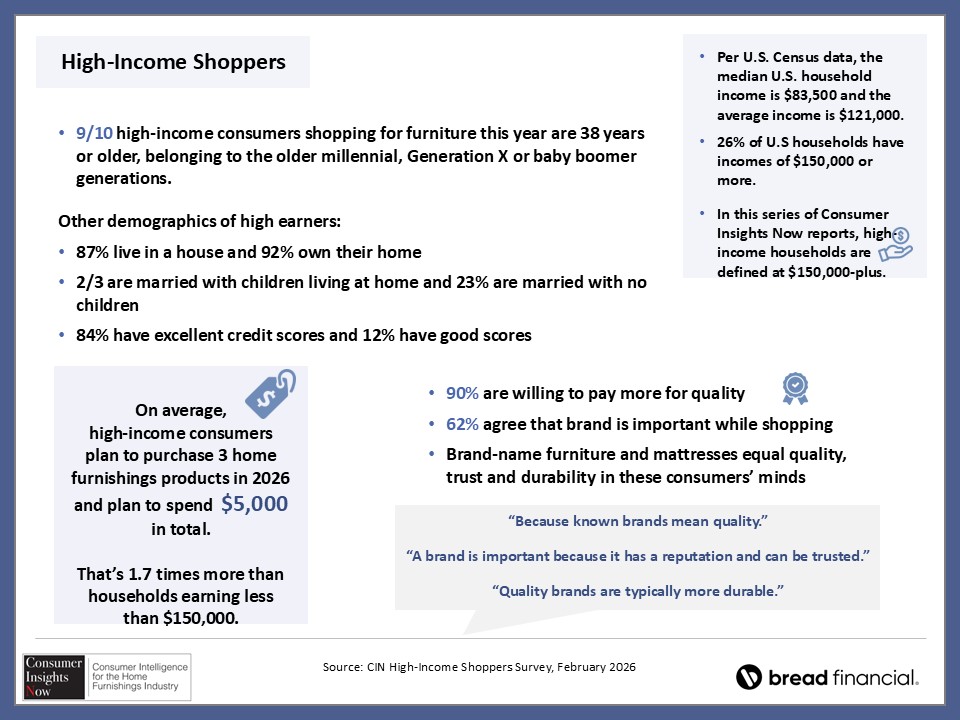
That’s the finding of Consumer Insights Now’s spring survey of high-income consumers. On average, these shoppers said they plan to buy around three furniture items this year, spending at least $5,000 — at least 1.7 times more than households earning less than $150,000 per year.
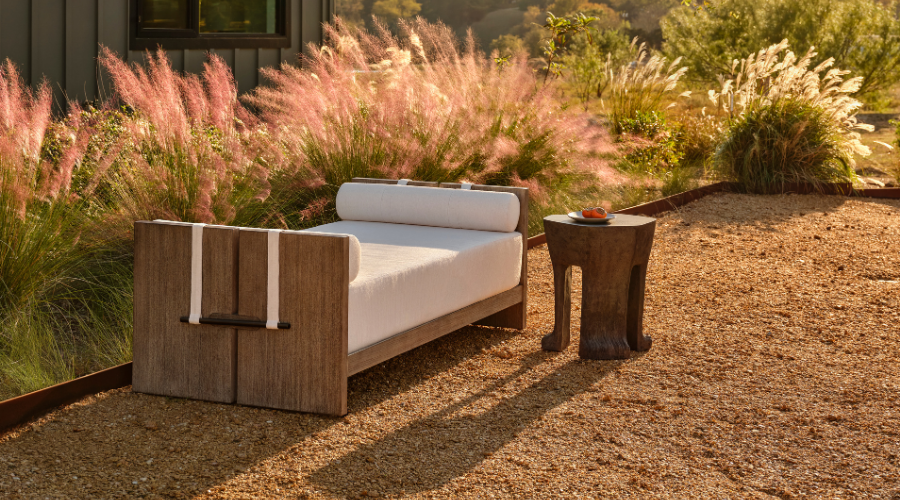
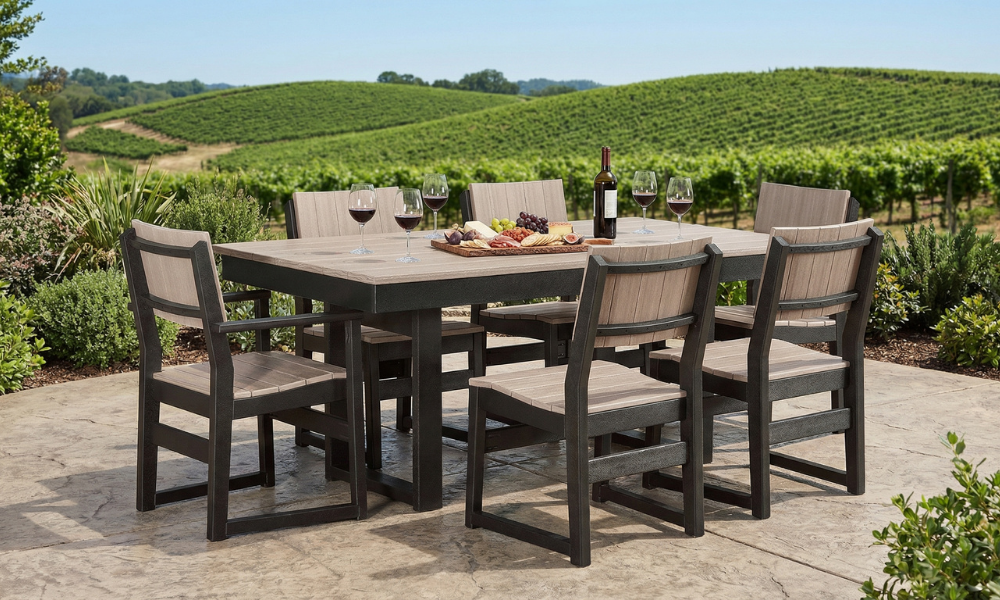
And outdoor furniture is on the list of to-buy items, with 20% of survey respondents saying they plan to buy furnishings for their patios or backyards this year. Outdoor furniture ranked just slightly below dining furniture, primary bedroom furniture and office furniture in likelihood to purchase.
High-income shoppers prioritize quality when shopping for outdoor furniture. Nine out of 10 high-income furniture shoppers said they were willing to pay more for quality, and 95% of those making $250,000 or more per year prioritize quality over price.
Local and specialty retailers outpaced online giants such as Amazon and Wayfair as the source for new furniture for high-income shoppers, with 42% saying they would turn to local and specialty stores. But national furniture chains and big-box retailers led the pack, at 72% and 43%, respectively. Baby boomers were more likely to shop at local and specialty stores while Gen X, millennials and Gen Z prefer national chains.
High-income consumers are more likely to be loyal to a retailer than they are a brand. More than half said they shop the same retailer for furnishings year after year, but only 42% stay loyal to a specific brand. That said, six out of 10 high-income consumers say brands matter when buying furnishings. Older millennials — ages 38 to 45 in 2026 — are most focused on brand, with 70% saying it factors into their shopping choices. And 75% of those making between $175,000 and $199,999 said brand is important.
“I tend to buy what I know, and that means having a personal experience with the brand,” one respondent said, while another noted, “I know what kind of performance and quality to expect when I shop with a brand I’ve shopped before.”
Most high-income consumers redesign their spaces and purchase new furnishings every five years or more, but more than one in three do so every two to four years.
While 77% of high-income consumers said their personal financial situation is excellent or good, 74% think the economy is only fair or terrible/poor. More than half of respondents said their finances were basically the same this year as in 2025, but an overwhelming majority — 91% — are at least a little concerned about inflation.

High-income consumers rank new furniture fifth on their list of spending priorities, behind saving for retirement, travel, health care expenses and family expenses such as college, weddings and clothing. Furniture ranks above experiences such as concerts and sporting events, as well as new cars, in spending priority.
But buying a new or second home may be off the table for a while for these consumers. Most high-income consumers said that mortgage rates need to be below 5.5% to trigger them to buy. With the Federal Reserve announcing last week that it would not change current interest rates, and average 30-year fixed-rate mortgage interest at around 6.45% this week, many of these consumers are likely to sit tight until a potential rate cut later this year.
Consumer Insights Now surveyed 825 United States consumers in February. Respondents all have household incomes of $150,000 or more, and all purchased or plan to purchase new furnishings in 2026. All respondents are either the primary or joint furniture purchase decision-maker. The survey was sponsored by Bread Financial.