

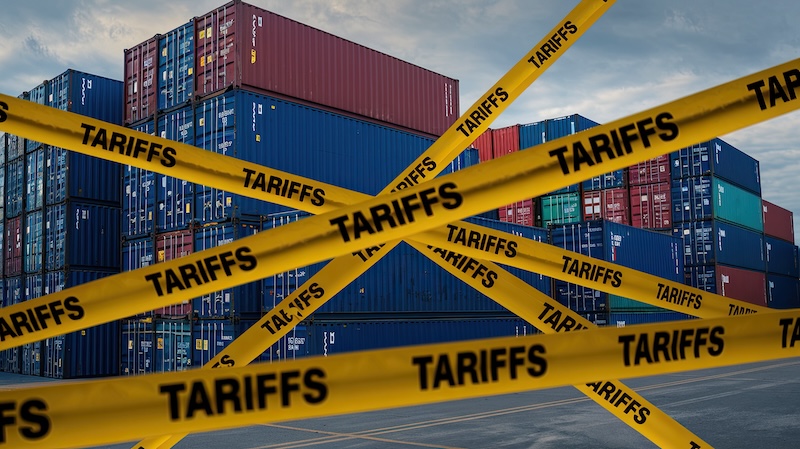

The United States Supreme Court’s ruling on the validity of the Trump administration’s International Emergency Economic Powers Act tariffs late last month was supposed to be good news for the home furnishings industry, but the reality has been far more complicated.
The court ruled that the president does not have the authority under IEEPA to unilaterally impose broad tariffs. While that wiped out a large number of duties, tariffs imposed under Section 232 of the Trade Exposition Act of 1962 and Section 301 of the Trade Act of 1974 still remain.
“Typically, Section 301 is country-specific, whereas Section 232 is industry- or sector-specific,” said Chris Andresen, senior vice president at lobbying firm Dutko Government Relations. “But those processes involve investigations, opportunity for public comment and different milestones that take time.”
Andresen said this is why Trump initially used IEEPA to establish tariffs because that avenue afforded him the immediacy to make a big statement while leveraging Section 232 and Section 301 to set more solid, long-term duties. Tariffs on aluminum, steel and upholstered furniture fall under Section 232. The investigation process for Section 301 tariffs usually lasts around a year while those for Section 232 can take up to nine months.
The Trump administration is preparing to announce country-specific Section 301 investigations, according to the Wall Street Journal. The newspaper reported that sources close to the administration said the investigations will focus on fighting “excess industrial capacity from export-reliant nations such as China.” The investigations also could target specific nations or issues, such as digital trade policies deemed unfair to American businesses.
“Section 301 was the authority used in the first Trump administration to set the initial China tariffs,” Andresen said. “And those remain in place. The Biden administration looked at them — there’s a mandatory review — and they remained in place with few exceptions.”
A few days after the Supreme Court ruling, Trump imposed a new 10% ad valorem tariff on most imports under Section 122 of the Trade Act of 1974, citing balance-of-payment deficits. The president said those tariffs are necessary to reduce the nation’s $1.2 trillion trade deficit on goods and threatened to increase it to 15%, which is the limit allowed under the statute.
On March 5, 22 state attorneys general filed a lawsuit challenging the president’s authority to impose those duties under Section 122. Andresen said Trump is using Section 122 to buy time in the wake of IEEPA tariffs being struck down.
“The administration has used another authority (Section 122) that has never been used for tariffs, and it’s more limiting than IEEPA — only valid for 150 days,” he said. “In that five-month period, whatever the rate ends up being would fill the gap while the administration starts 301 investigations.”
What about refunds?
With the IEEPA tariffs overturned, the U.S. government owes around $166 billion in duty payments to approximately 330,000 importers. On March 6, U.S. Customs and Border Protection official Brandon Lord said the agency was implementing a system within 45 days to process tariff refunds. Around 2,000 companies such as Costco and FedEx have filed lawsuits since last year seeking refunds.
But while those major corporations will likely see refunds at some point, Andresen said small businesses such as independent patio retailers may not get the same relief.
“Not every retailer or manufacturer is going to be the importer of record — they may be buying wholesale from someone else,” he said. “And for small businesses, unless you have invoices or can talk to your suppliers about tariff fees, there’s nothing official in this guidance that will help that business that’s not the importer of record.”
A casual retailer who spoke under anonymity said they’re hopeful suppliers will share refunds, but so far, they haven’t heard anything from their vendors.
“Most of us are not the importer of record, so my guess is we won’t hear anything until the vendors get their money, and then we have to hope they do the right thing,” the retailer said. “I don’t think we actually know what the real tariff is anyway — either they build it into the price or they charge us a line item. I assume the tariff is based on their actual cost of the item and not what they are selling it to us for, so hopefully they follow the honor system and do the right thing.”
Andresen said that even though there will be a process in place for refunding tariff fees, it may take a while for businesses to see their funds.
“Given the number of entries and the fact that the CBP is a fee-based agency, there are workforce restraints,” he said. “There’s a finite number of people who can process.”
The Trump administration has admitted as much, saying it could take the government 4,431,161 hours to manually process refunds. The government must update a federal court with its proposed timeline for refunds by today.
Iran conflict complications
As if this situation wasn’t complicated enough, a new conflict in the Middle East has further muddled the global supply chain. Just yesterday, Iran struck three commercial ships in the Strait of Hormuz, punctuating its effort to halt traffic through the critical oil and shipping pipeline in retaliation for attacks from the U.S. and Israel.
And oil isn’t the region’s only commodity in jeopardy. Last week, aluminum prices jumped 1.7% to $3,194.50 per metric ton — the highest prices since January on the London Metal Exchange. Many of the region’s major aluminum producers — including Iran, which accounts for about 9% of the world’s aluminum production capacity — also use the Strait of Hormuz to deliver the metal to foreign locales. Iran also has fired missiles on neighboring countries such as Saudi Arabia, Bahrain and the United Arab Emirates, all of which are significant aluminum producers.
This disruption coupled with the existing 50% tariff on aluminum imports is beginning to force companies to make difficult decisions. Casual News Now obtained an announcement from Prestige Investment International, parent company of Prestige Casual furniture, informing retailers of an “emergency price adjustment” — a 7% price increase for Prestige Casual woven products and a 10% increase on firepits and aluminum frame furniture.
“Over the past year, the cost of aluminum has increased nearly 35%. In addition, recent production shutdowns in Iran — which account for approximately 10% of global aluminum output — are expected to further tighten supply and drive prices higher in the near term,” the notice said. “While Prestige has absorbed these rising costs for as long as possible, the continued volatility in raw material markets requires us to make a pricing adjustment to maintain product quality, supply stability and service levels.”
Similar price increases seem likely to come from other companies facing the same challenges as Prestige. And even if the conflict with Iran comes to a resolution, the fallout from that along with the ongoing tariff situation means the uncertainty that has persisted over the past year will continue for the foreseeable future.
“After a while, I think people just threw up their hands, because the president would put something on social media on a Friday and then it would be different by Monday,” Andresen said. “I do think people have adjusted to that style, but from a business standpoint, it’s impossible to plan or operate in this sort of environment without any certainty.”
Want to hear more from Chris Andresen on tariffs? Check out Mark Schumacher’s interview on the latest episode of Home News Now’s Ten out of 10:00 podcast.