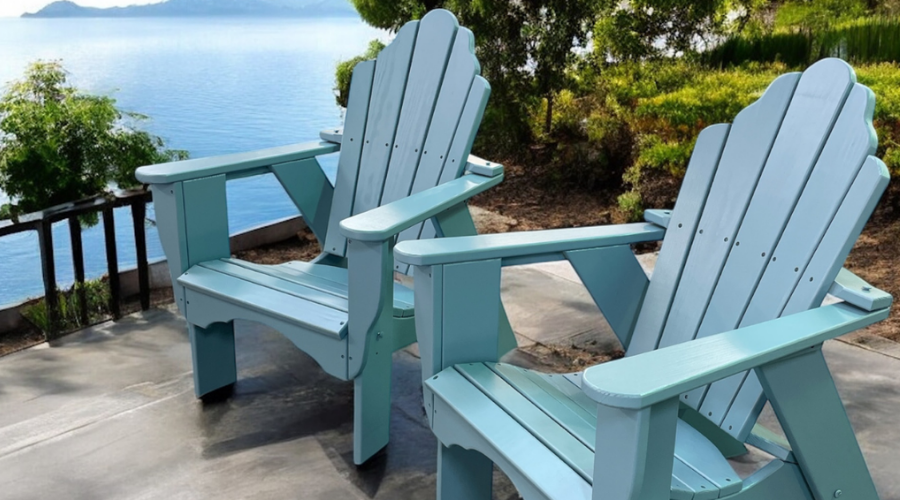
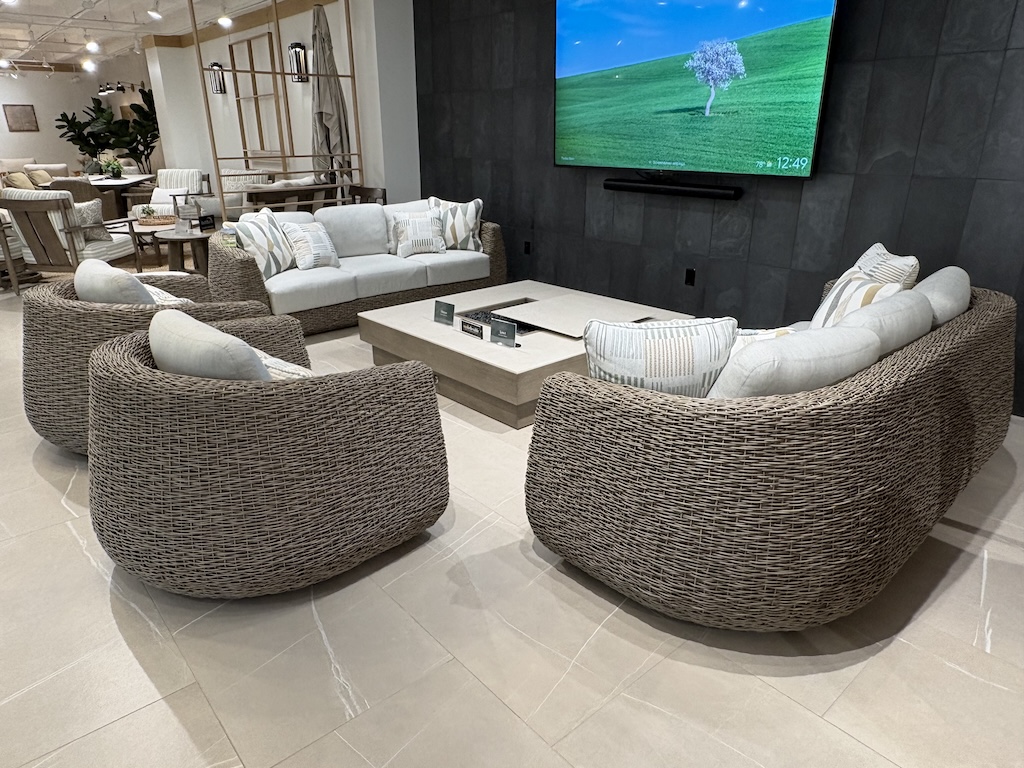
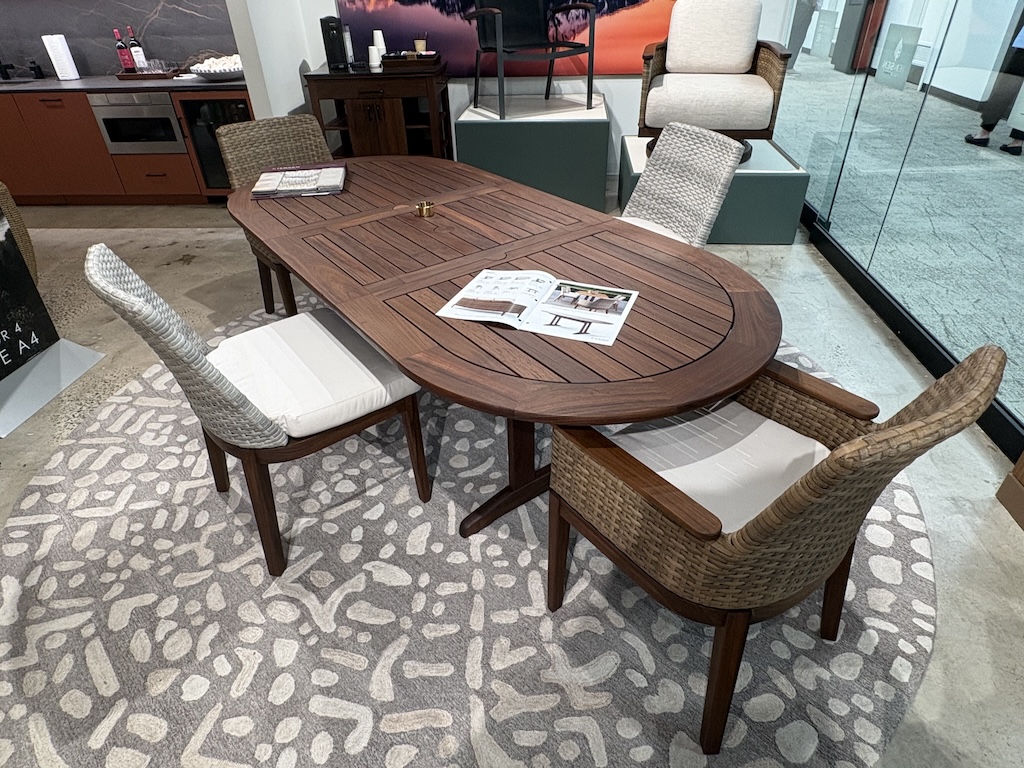




High-income consumers are turning to interior designers for help with outdoor rooms this year more often than they did last year. That’s just one of the findings of Consumer Insights Now’s survey of high-income shoppers, sponsored by Bread Financial.
Of the nearly two-thirds of high-income consumers at least considering using an interior designer this year, 18% said they plan to hire an expert to outfit their outdoor spaces — up 7% from last year.
Ninety-three percent of survey respondents who plan to work with a designer in 2026 will do so for their existing primary home, while 10% will hire for a new-construction primary home. Only 3% plan to use a designer for their existing second home and 2% on a new-construction second home.
Overall, high-income consumers have a pretty high opinion of designers and their expertise, with 91% of those planning to work with one and 74% of all high-income consumers saying designers are style experts. Both groups overwhelmingly (89%) feel that designers bring new ideas to home projects, while 83% of those using designers think they save time compared to just 56% of all high-income consumers who believe the same.
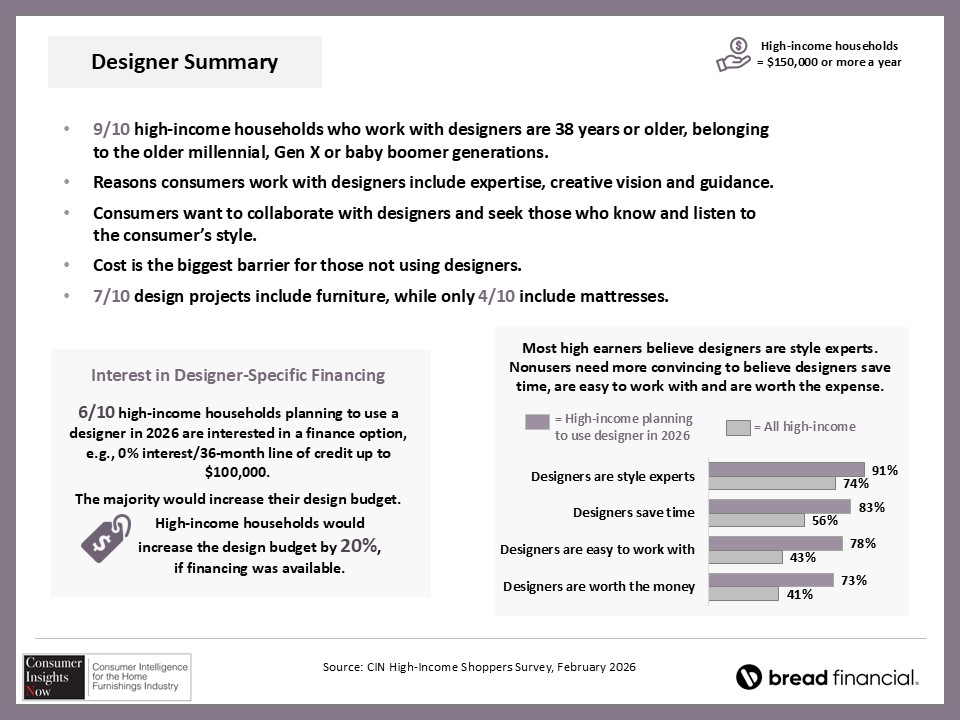
Most respondents — 79% of those using designers and 66% overall — believe designers help them buy quality brands. But a significant number of high-income consumers — 67% of those using designers and 81% who are not — think designers are expensive. Of those using designers, 73% think they’re worth the money, while only 41% of the other group think so.
“She helps confirm I’m making good choices and pulls everything together,” one respondent said of why they work with designers, while another said they appreciate, “The knowledge they have. They also have resources to find quality furniture.”
And of those who don’t plan to use a designer, the more widely available wealth of design inspo online plays a role. “It’s unnecessary when I can look at Instagram and design sites,” one respondent said, while another reported, “I get lots of ideas from social media, magazines and Ikea.”
More than half of high-income consumers report being excited and confident about working with a designer, and those households plan to spend an average of $21,500 for the total designer project. That’s 3.5 times more than households earning less than $150,000 who plan to work with a designer.
Most survey respondents have previously worked with an independent designer, and 55% expect to do so this year. A quarter of respondents worked with a designer on staff at a local furniture store in the past, but only 7% plan to do so in 2026. Baby boomers and those with a household income of $250,000 or more are more likely to work with an independent designer while Gen X, older millennials and those with an income of $150,000 to $249,000 prefer staff designers at local stores.
Seven out of 10 high-income consumers want to be involved in the design process with their designer, with older millennials ages 38-45 most interested in being a part of the process.
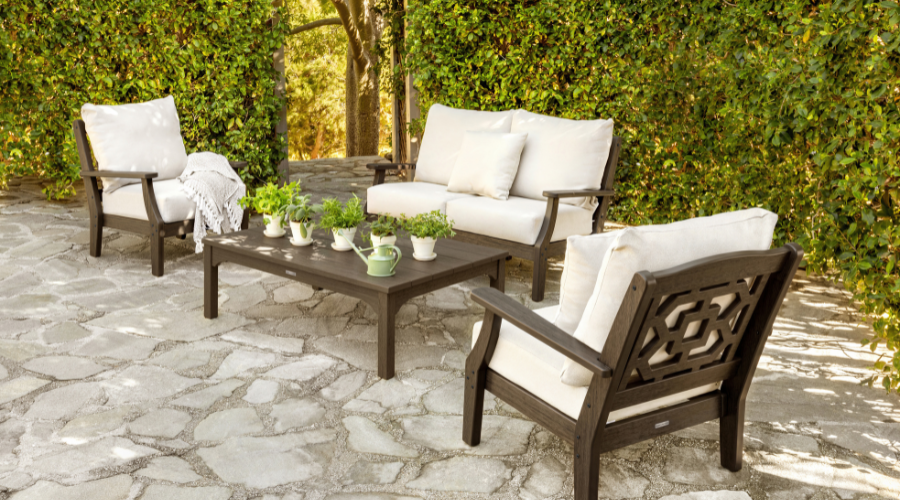
New furniture will be a part of 75% of 2026 design projects, and 78% of high-income consumers will select those furnishings along with their designer. National furniture chains account for 70% of where consumers plan to source, followed by specialty retailers at 60% and local or regional furniture stores at 47%.
Six out of 10 high-income households that plan to use a designer this year are interested in financing, and the most interested are consumers making $100,000 to $249,000 per year. Consumers also would be more likely to work with a designer, increase their budget, add additional spaces to the project and buy higher-end furniture if they had access to financing. High-income households would increase their design budget by 20% from an average of $21,500 to $25,750 if financing was available. Most of these consumers also said they would prefer a 12- or 24-month financing option with no (deferred) interest.
Consumer Insights Now surveyed 825 United States consumers in February. Respondents all have household incomes of $150,000 or more, and all purchased or plan to purchase new furnishings in 2026. All respondents are either the primary or joint furniture purchase decision-maker. The survey was sponsored by Bread Financial.